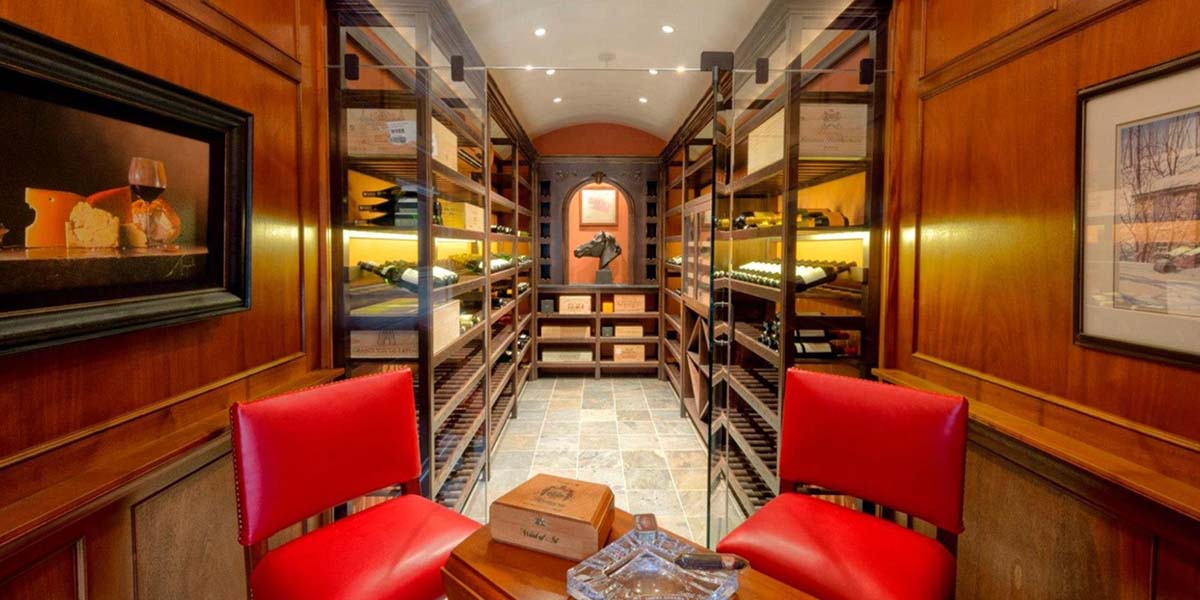
When most people picture a new wine room, they think about the finishings—the rich walnut racks, the seamless glass walls, or the ambient LED lighting. But if you’re a serious collector, the most important part of the project is the work that happens before the first bottle rack is ever put in place.
True wine cellar construction is less about interior decorating and more about specialized building science. If a room isn't framed, sealed, and insulated correctly, you aren’t building a cellar; you’re building an expensive closet that will eventually ruin your wine, grow mold, and burn out a compressor.
At Cellarium Wine Cellars, we manage the entire construction process for high-end residential estates and private country clubs along the East Coast and across the country. We don’t cut corners, and we don’t use generic contractors who treat a cellar like a standard walk-in pantry. Here is exactly what goes into a professional, climate-controlled build.
Every successful wine cellar construction project starts by creating a completely sealed "envelope" around the designated space. Wine needs a constant environment—ideally 55°F and 60% relative humidity. Because standard homes are kept much warmer and drier, moisture will naturally try to force its way into your cool cellar through the walls.
To stop this, we strip the room down to the bare studs and apply a heavy-duty, commercial-grade vapor barrier to the warm side of the framing. This step is non-negotiable. If you skip the vapor barrier, the temperature difference between your cellar and the rest of your house will cause condensation to form inside the walls. Over time, that moisture will rot the wood, ruin your labels, and cause structural damage to your home.
Once the barrier is set, we pack the walls and ceiling with dense, high-R-value insulation. This keeps the cold air in and the warm air out, ensuring your cooling unit doesn't have to run continuously.
The room also requires an airtight seal at every single exit point:
A standard home AC unit is designed to pull moisture out of the air to keep people comfortable. A wine cellar cooling system does the exact opposite—it maintains the cold while preserving the humidity your corks need to stay plump and sealed.
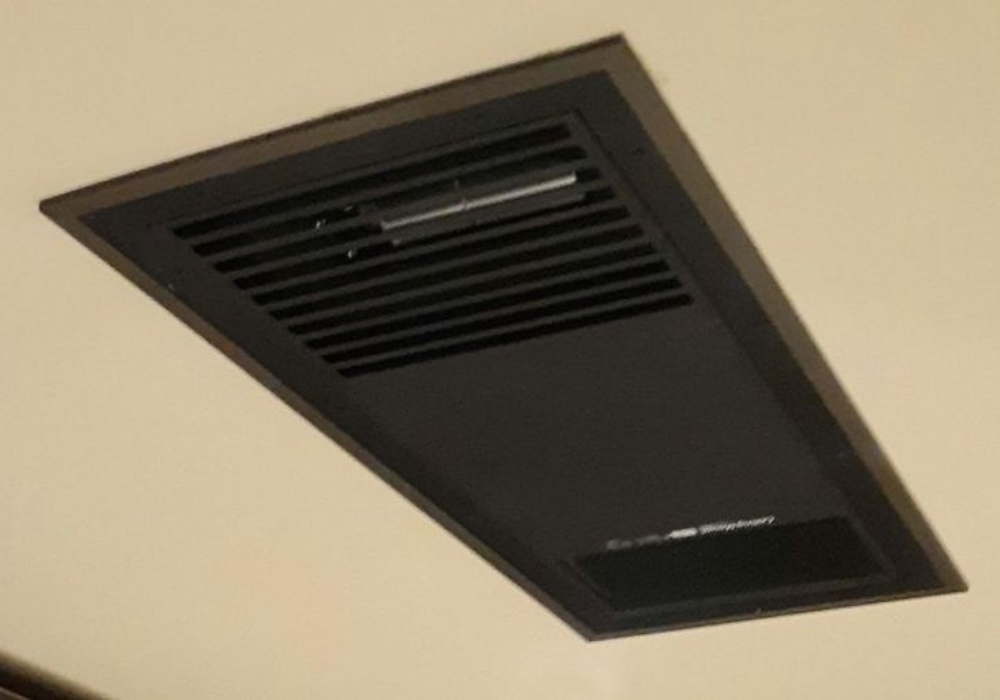
During the structural phase of wine cellar construction, we run the line sets and electrical lines for professional refrigeration systems. We specialize in ducted split systems, which allow us to place the noisy mechanical components (the compressor and condenser) completely outside the living area or in a mechanical room. This leaves your cellar area perfectly silent, with the conditioned air delivered through hidden, low-profile vents that blend into the ceiling trim.
After the walls are dry-walled and painted, the final interior touches must be handled with care. Standard paints and wood stains release volatile organic compounds (VOCs) for months after application. In a sealed cellar, those chemicals can penetrate the corks over time, altering the flavor and aroma of your vintages.
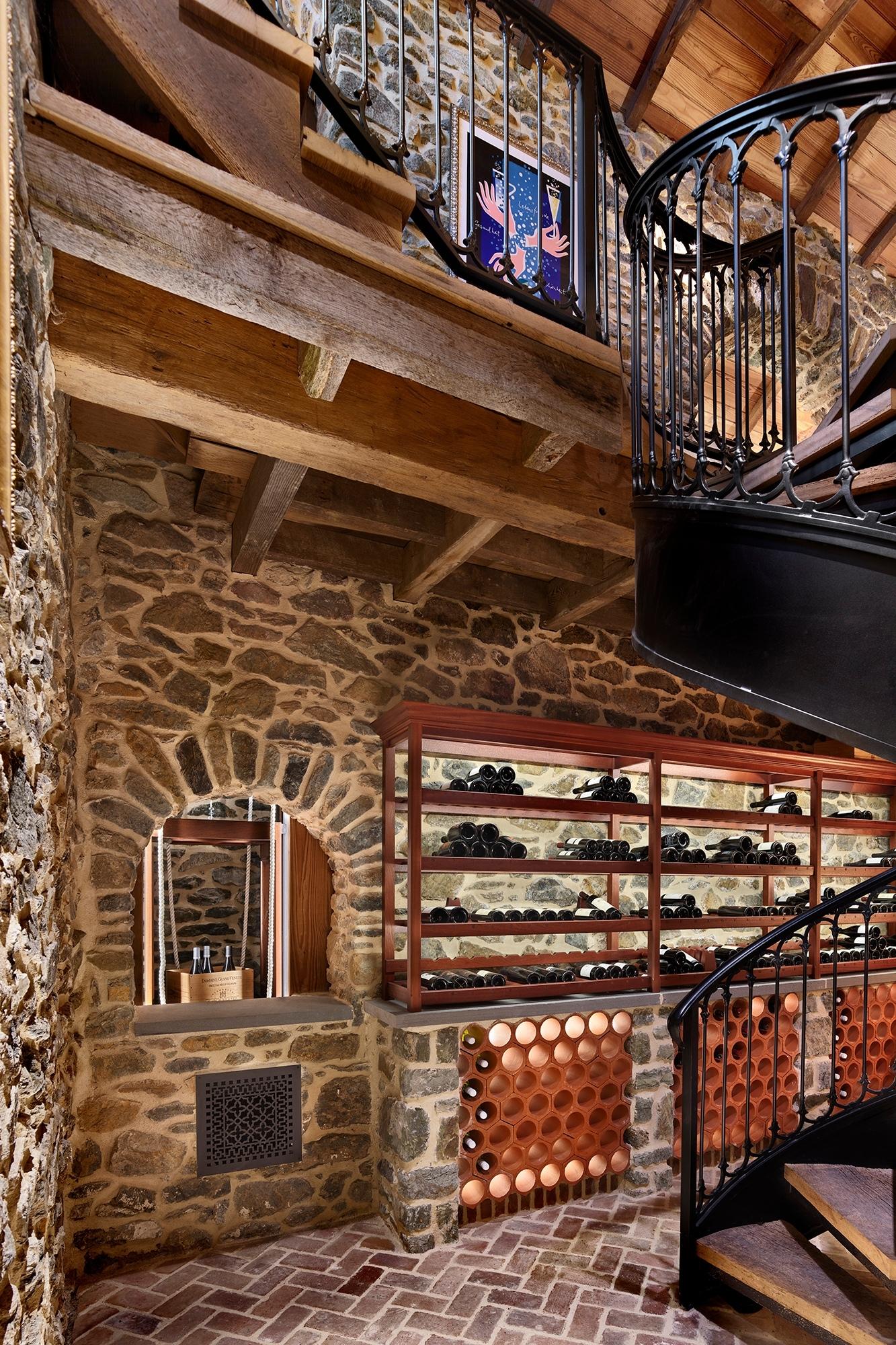
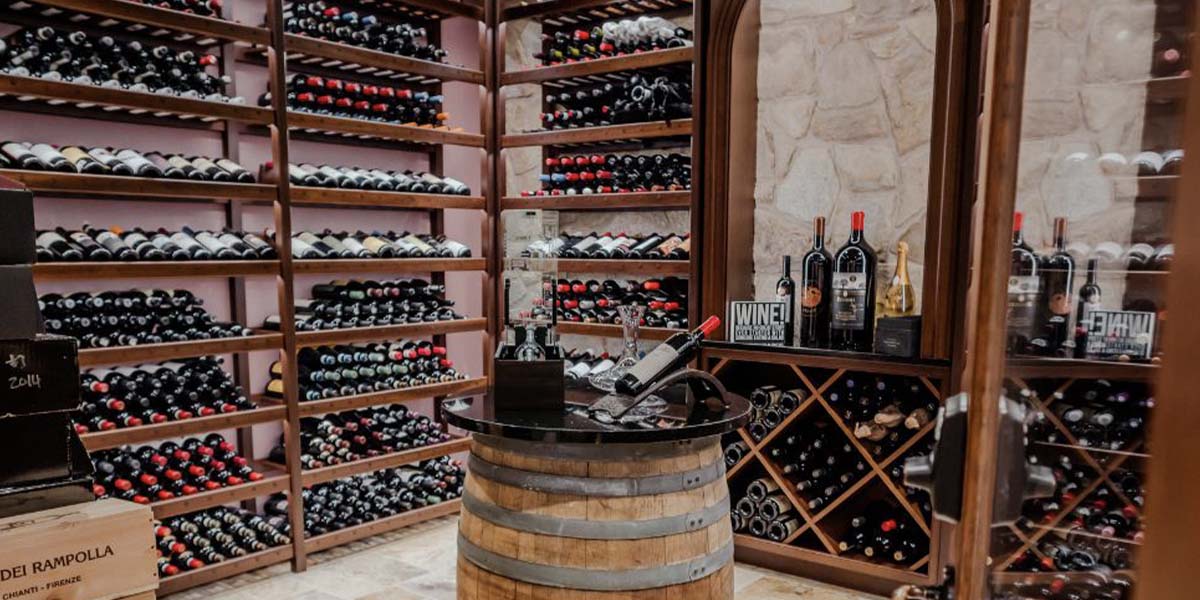
We construct our custom wine racks and wall paneling using premium, dense hardwoods like Sapele Mahogany, Cherry, and Walnut. We hand-sand the wood and leave it raw, or finish it with specialized, low-VOC stains tested specifically for cellar environments.
You wouldn't hire a standard house painter to restore an antique oil painting, and you shouldn't hire a standard home remodeling crew to handle your wine cellar construction. It takes a team that understands structural weight, thermal load calculations, and specialized carpentry.
Can you build a wine cellar on the second floor of a home? Yes. While basements provide natural thermal protection, a proper vapor barrier, insulation, and cooling layout allow us to build a high-performing cellar anywhere in a home—including main-floor dining areas or second-story lounges.
How long does the construction process take on-site? Once the initial room preparation, framing, and mechanical rough-ins are finished, the final assembly of the custom millwork and cooling connection usually takes between one to two weeks, depending on the scale of the room.
Do you build wine storage lockers for commercial spaces? Yes. We have extensive experience building multi-family residential storage and secure, master-keyed wine locker systems for country clubs. We build them to tie directly into a single, cohesive climate control system for the facility.
Your collection represents significant time, resources, and appreciation for the craft of winemaking. Don't risk the future of your bottles with substandard room preparation.
Take a look at our Porfolio to see the structural integrity and layout diversity of our past builds. When you are ready to move from basic storage to a professionally engineered wine space, contact our team to schedule a site consultation.
Smart Layouts. Solid Materials. Expert Installation.


.png)




.jpg)