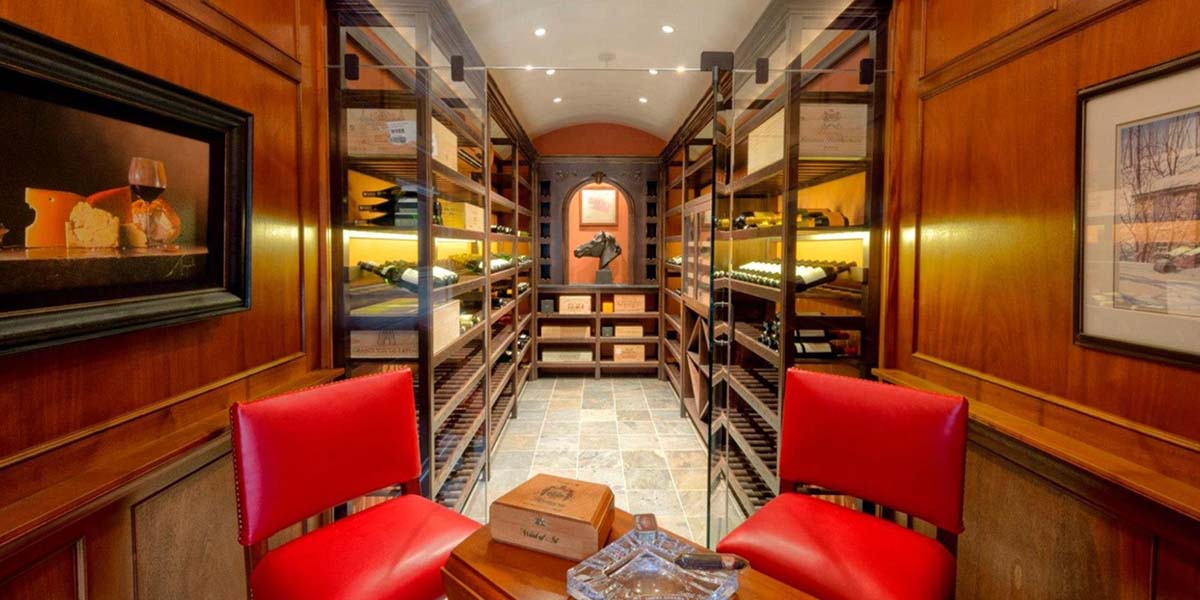
When planning a luxury wine room, it is easy to focus on visual details—the warmth of Sapele Mahogany racking, the clean lines of frameless glass, or the soft glow of concealed display lighting. But the real heart of any climate-controlled cellar sits behind the scenes: the refrigeration system.
A common mistake homeowners and general contractors make is assuming a standard home air conditioner or ductless mini-split can handle cellar duty. It can’t. Standard air conditioning is engineered to cool living spaces down to roughly 70°F while pulling moisture out of the air for human comfort.
A wine collection requires an entirely different set of environmental parameters: a constant 55°F temperature and a steady 60% relative humidity.
Attempting to push a standard home AC unit down to 55°F will cause its coils to freeze solid, drying out the room air in the process. Dry air causes corks to shrink, allowing oxygen into the bottle and spoiling your wine. Specialized wine cellar refrigeration units are specifically engineered to maintain precise cold temperatures without stripping away essential humidity.
At Cellarium Wine Cellars, we view refrigeration as a fundamental pillar of building science. Here is what serious collectors need to know about choosing, sizing, and installing the right system.
Not all cellar cooling setups are created equal. The physical layout of your home, proximity to exterior walls, and noise tolerance will determine which equipment configuration fits your build.
These are all-in-one systems where the evaporator and condenser are housed in a single chassis. The unit mounts directly through an interior wall, venting hot air and exhaust into an adjacent, well-ventilated room or utility space.
In a ducted self-contained setup, the cooling unit is installed in an adjoining mechanical room or attic space up to 25 feet away. Flexible insulated ductwork carries cool air into the cellar and channels warm return air back to the equipment.
Split systems separate the cooling process into two distinct components: an indoor evaporator coil hidden inside the cellar and a heavy-duty outdoor condenser unit placed outside the home or in a dedicated mechanical space. The two halves are connected by insulated copper refrigerant line sets.
Sizing wine cellar refrigeration units is not as simple as matching equipment tonnage to square footage. An undersized unit will run continuously, burning through energy and prematurely failing, while an oversized unit will short-cycle, causing rapid temperature swings that stress your bottles.
Before selecting equipment, our engineering team performs a comprehensive thermal load calculation that accounts for multiple structural variables:
A luxury wine cellar should be a tranquil retreat, not a noisy mechanical closet. The hum of a loud compressor ruins the experience of tasting a rare vintage with guests.
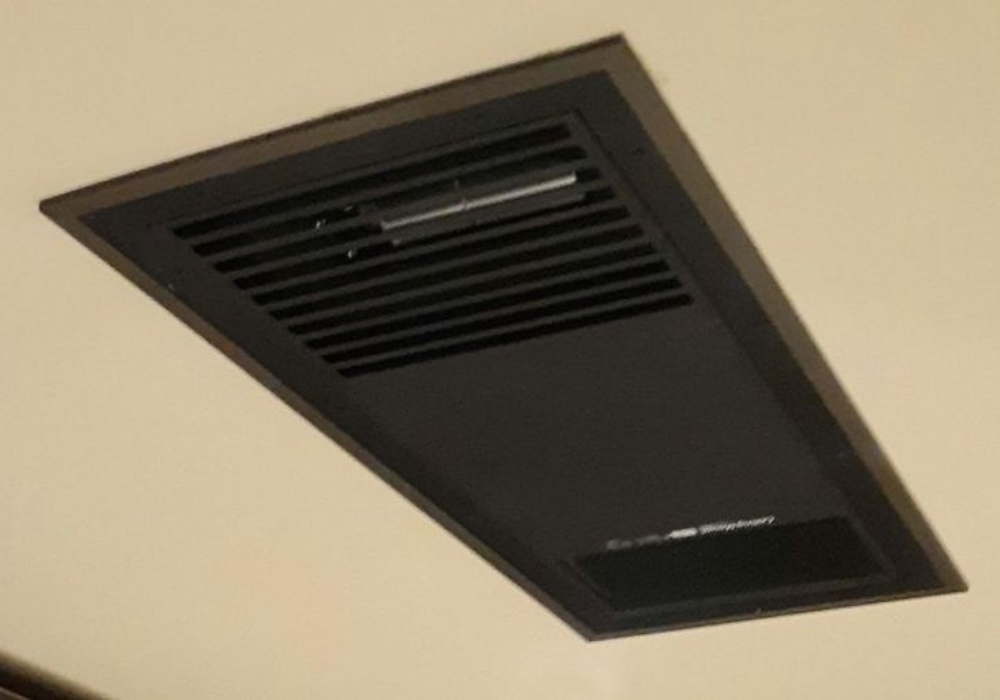
By utilizing remote split systems, Cellarium hides mechanical equipment completely out of sight and sound. We route air through custom wood-matching supply grilles seamlessly integrated into our custom cabinet crowns or ceiling trim. You get precise climate management with near-silent air delivery.
How often do wine cellar refrigeration units need to be serviced?Just like a high-end home HVAC system, cellar cooling equipment should be inspected annually by a certified technician. Routine service includes cleaning the condenser coils, checking refrigerant pressures, and inspecting condensate drain lines.
What happens to my cellar if the power goes out?A properly insulated cellar with closed-cell spray foam and a continuous vapor barrier acts like a thermos. If the power goes out and the door remains closed, a well-built room will hold safe temperatures for 24 to 48 hours without active cooling. For high-value collections, we often integrate backup generator circuits into our electrical specs.
Do these units require a dedicated water line for humidity?In most climates, a properly sealed thermal envelope naturally retains the moisture released from the air during cooling, keeping relative humidity near 60%. However, in extremely dry desert regions, we integrate an automated, low-profile humidifier directly into the supply ductwork.
Your collection represents years of careful sourcing, passion, and investment. Don't compromise its longevity with generic cooling equipment or improper installation.
Explore our Project Portfolio to see how we integrate high-performance climate systems into custom estate cellars across the country. When you are ready to discuss your climate control specs, contact our team to schedule a site consultation.
Smart Layouts. Solid Materials. Expert Installation.


.png)





.jpg)